
Why a generic LLM won’t fix your product data problem
Kito finds, fixes, and verifies product data automatically, at enterprise scale: no migration, no dashboard, no added headcount.
The average enterprise product dataset carries at least three data entry errors per SKU, along with thin descriptions and missing attributes that keep products from reaching the right audience. The risk hides in product data, invisible until a customer, an ad platform, or a regulator finds it first. Every gap in your product data is revenue you don't collect, even before a single dollar is spent on ads. If you sell other brands' products, it's worse: you don't control the quality of the data the suppliers provide you, but you inherit every bit of the risk.
Most teams point a generic LLM at the gaps. It's the wrong tool for the job. It rewrites with total confidence, even when it's wrong: fabricated claims, flowery filler, compliance errors that slip straight through. Kito was built for this problem specifically, and it runs the same way across fashion, beauty and home products, applying the standard each category demands rather than one generic pass over everything.
What Kito does
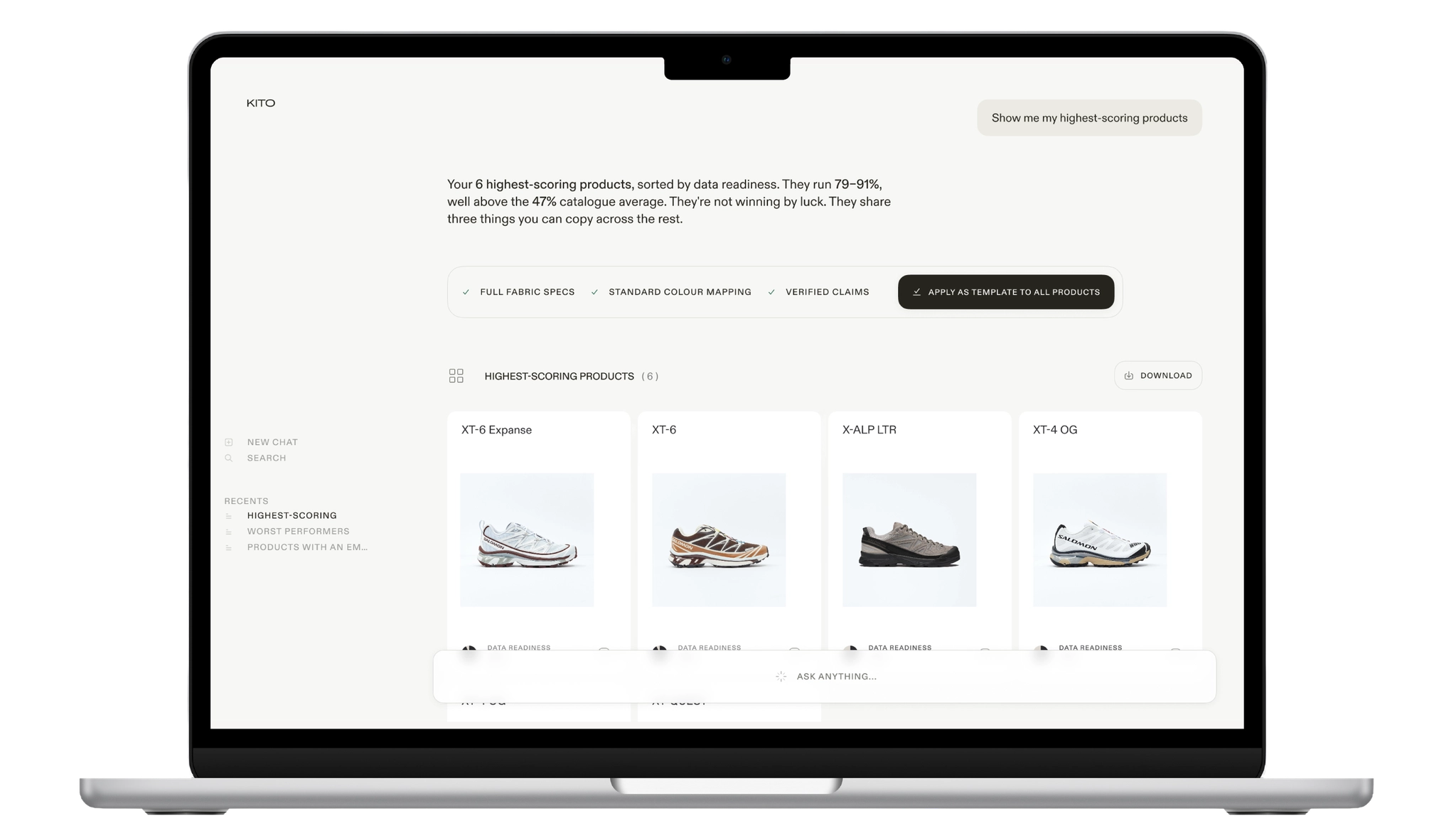
Kito connects to your systems with no migration required and is working with your product data within three weeks, with no engineering lift on your side. It audits your product data and finds what's wrong: bad images, mistagged categories, unsupported claims, thin or duplicated descriptions. It then fills what's missing, drawing only from your own data and verified outside sources, never inventing a spec or a claim to fill a gap.
Every fix is reviewed independently by a separate system before it ships, so nothing that generates a correction is also the thing approving it. Kito applies that review across hundreds of thousands of SKUs, reducing the work your team needs to do by hand. A fashion retailer saw conversion hikes of up to 3.4 points in 30 days after fixing basic data alone.
Precision, not just speed
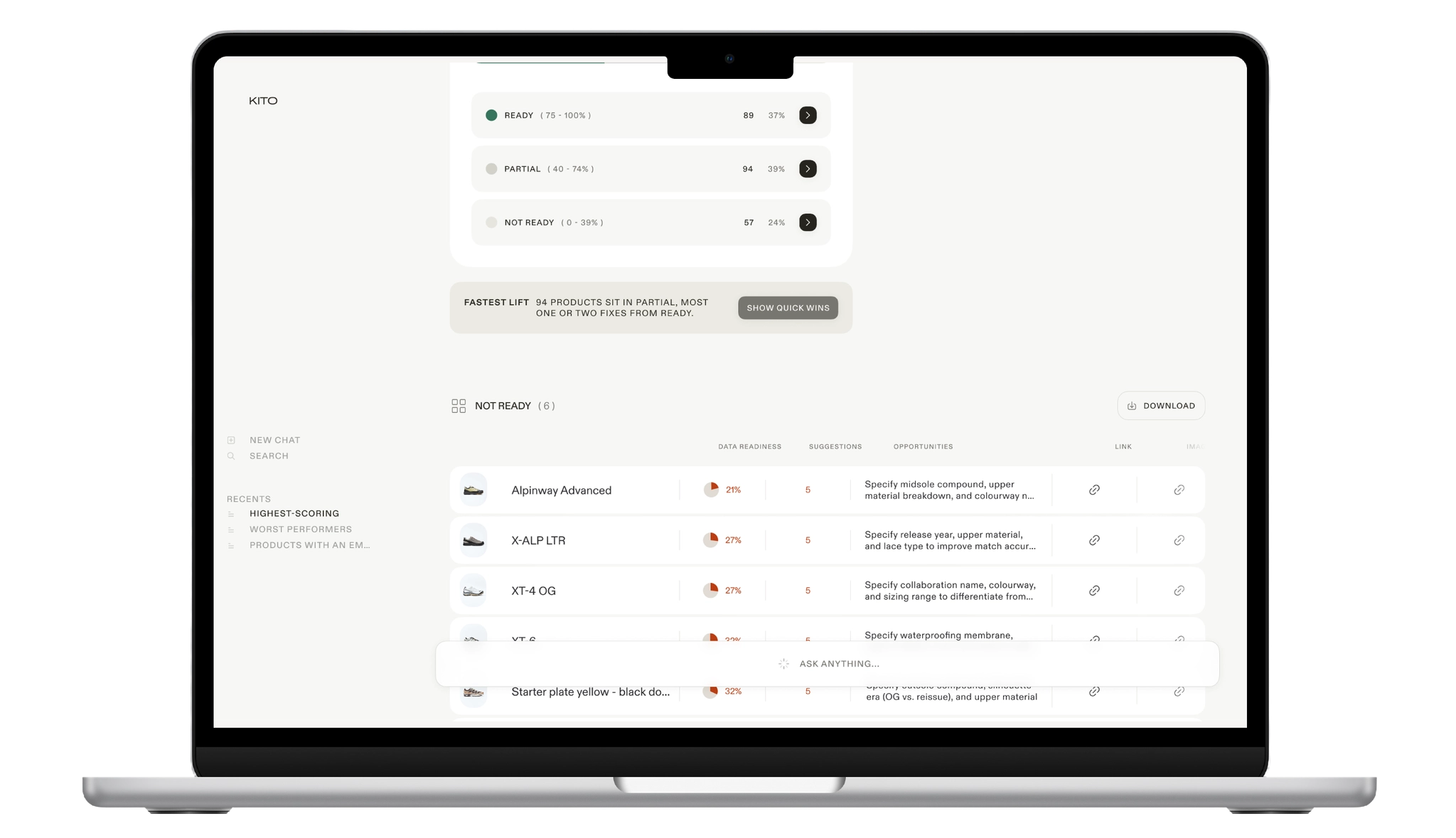
A wrong colour is a bad customer experience. A false material claim, an unproven health benefit, or an overstated skincare result is a liability that grows with your product range. Kito is trained specifically on compliance failure modes across categories, checking continuously, so a beauty claim is held to the same rigour as a home-goods safety spec or a material detail.
It holds every product to the most current standard a category actually requires, and is as tight as it needs to be for regulated claims.
Ask, and it’s done
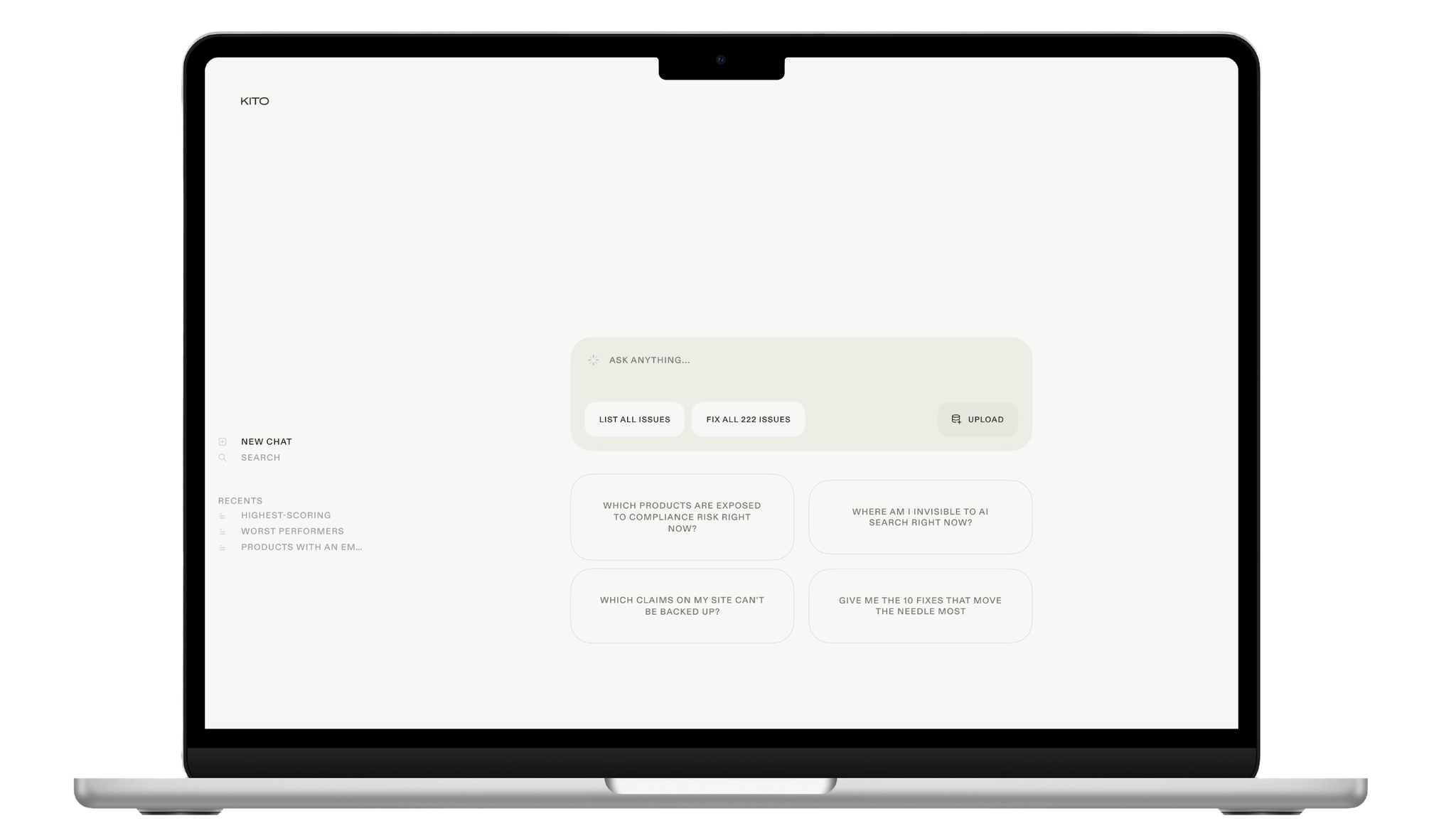
No dashboard or system to learn, no extra headcount to hire to handle Kito. Ask Kito for what you need in plain language and get it back the same way: fixes, reports, edits, all through conversation, traceable back to the source data behind every change. Your team's time goes only to the edge cases that genuinely need a person's judgment. Everything else is already handled.

Kito Journal / 01
Back to topA closer look